The campaign poster Download
Media contact
Scott Henderson
scott@hendersonpr.ca
416.303.5440
The Book at a Glance
Title: The Name in the Stone: The Lost Journal of Henry Collier
Author: Scott Henderson
Publisher: Muckleston House Press, Kingston, ON
Publication: October 20, 2026
Paperback: 210 pages, illustrated with 26 plates · ISBN 978-1-0679393-0-4 · $24.99
Ebook: ISBN 978-1-0679393-1-1 · $12.99
Online: Amazon (paperback and Kindle) and Kobo
Website: TheNameintheStone.com
Trailer: YouTube
Follow Alfred
@AlfredShaw1875
About Scott Henderson
Scott Henderson has spent nearly three decades championing Canadian storytellers. As Vice-President, Communications at Bell Media, he led national campaigns for some of Canada’s most-watched original television; promoted the Giller Prize and the Juno Awards; and served on the boards of the Academy of Canadian Cinema & Television, Hot Docs Canadian International Documentary Festival, and the BANFF Television Festival Foundation. He is vice-chair of the board of the Kingston Canadian Film Festival and treasurer of the board of Tourism Kingston. Born in Carleton Place, Ontario, and a Queen’s graduate in History and English, he lives in Kingston. The Name in the Stone is his first work of fiction.
About Rink Rat Productions
Rink Rat Productions is an independent film and television production company based in St. John’s, Newfoundland and Labrador. Founded in 1994, it has produced the award-winning feature Maudie, an international co-production with Screen Door and Parallel Films; the comedy How to Be Deadly, winner of the Canadian Comedy Award for Best Feature Film; Skeet; the CBC movie A Christmas Fury; and, with Paperny Entertainment, the Discovery Channel series Cold Water Cowboys. Its president is producer Mary Sexton.
NEWS RELEASE, October 20, 2026
Kingston Author Scott Henderson Answers “Who is Alfred?” with THE NAME IN THE STONE, a Gothic Novella Published Today
Already optioned for film and television by Rink Rat Productions, the book arrives in time for Halloween with a transmedia launch and rollout straight from the screen-industry playbook.
KINGSTON, Ont. (Oct. 20, 2026) — A name carved into the limestone of an 1843 Kingston house has inspired a Gothic novella and a local historical storytelling project that carries its fictional world well beyond the page. Muckleston House Press, the imprint of Kingston author and former communications executive Scott Henderson, today published his debut novella, The Name in the Stone: The Lost Journal of Henry Collier, and announced that the book has been optioned for film and television by Rink Rat Productions of St. John’s, N.L. The book combines the real-world people and places of Victorian Kingston with invented characters and situations, and is illustrated with 26 plates in the style of Victorian newspaper engravings. It is on sale from today in paperback at local Kingston stores and online, and as an ebook.
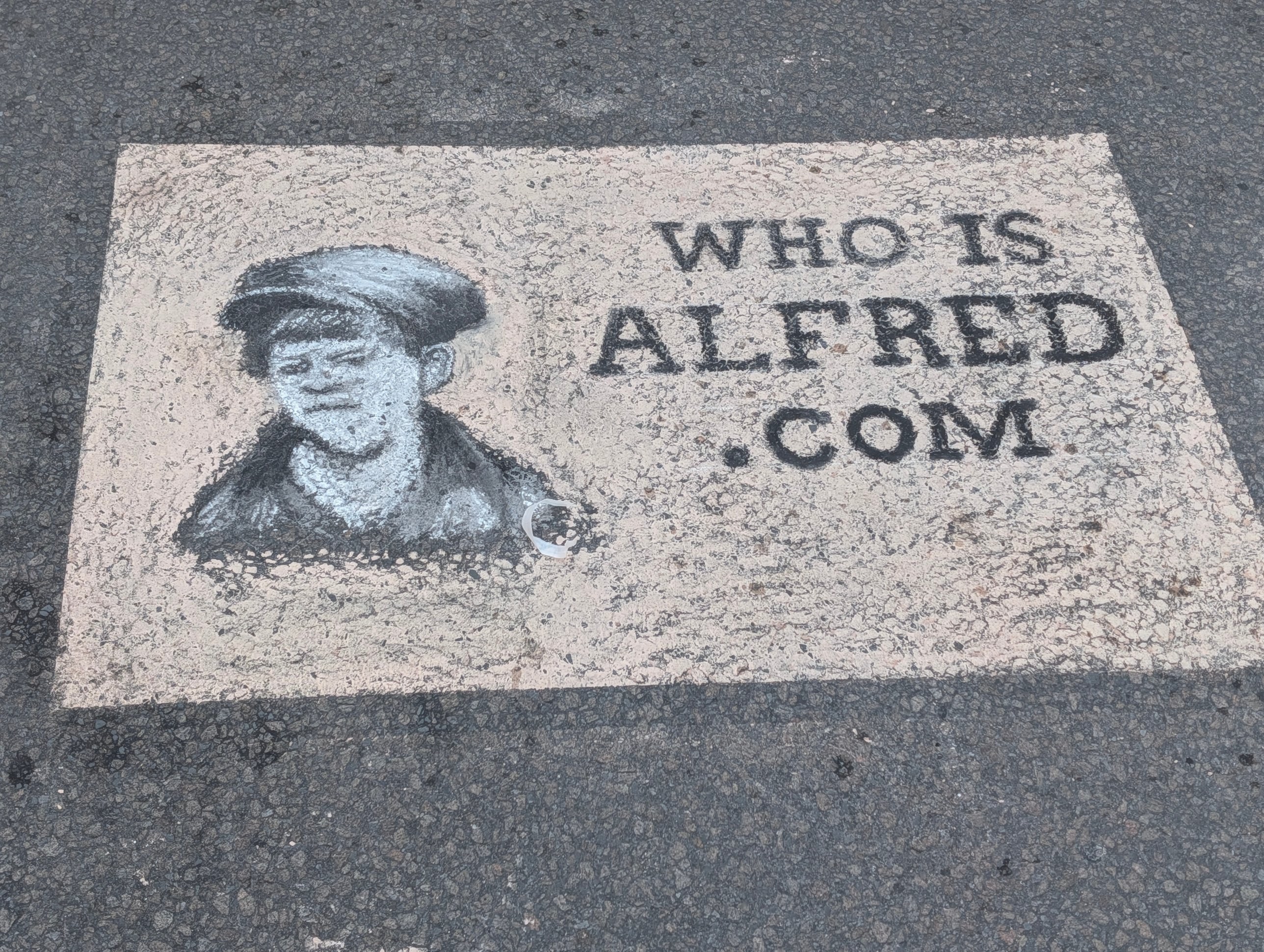
Since August, a campaign of missing-boy notices, chalk portraits, and social media posts across Kingston has been asking one question: “Who is Alfred?” The question comes from a real inscription, the single word Alfred cut into the exterior limestone of Muckleston House on King Street East, Henderson’s Georgian heritage home. No surviving record identifies who carved it, when, or why. The Name in the Stone imagines an answer.
Set in Kingston in the autumn of 1875, The Name in the Stone presents itself as the private journal of Henry Collier, discovered in 1906 in the old vaults of Kingston’s Bank of Montreal building, now the Frontenac Club, a boutique hotel. Henry was a young clerk there in 1875, with a clear view across King Street to Muckleston House. When Alfred Shaw, a twelve-year-old orphan placed in the household’s service, vanishes after witnessing something he was never meant to see, Henry is drawn into a web of murder, scandal, and civic respectability — and must decide whether to speak for the dead or help the living keep their place.
Henry Collier and Alfred Shaw are fictional, but the city around them is real. “Kingston calls itself Canada’s museum capital, and there seems to be a historical plaque around every corner,” said Henderson. “But a plaque can only tell you who and what was there. I wanted readers to experience Kingston as it was in the autumn of 1875 — to walk its streets and encounter the people behind the names and buildings, in places they can still visit today. In a sense, I wanted to create a living museum, without walls or opening hours, where the exhibits are the streets themselves.”
The Name in the Stone was optioned before today’s publication by Rink Rat Productions, whose credits include Maudie, starring Sally Hawkins and Ethan Hawke, winner of seven Canadian Screen Awards including Best Motion Picture.
“What drew me to The Name in the Stone was how visual the story already feels,” said Mary Sexton, president of Rink Rat Productions. “The mystery grows out of Kingston in 1875, and the story begins with something real that is still there on the street today. Walk through Kingston and you can see where the cameras would go. Few cities could play themselves in a story set in 1875. Kingston can. Scott has built a detailed world around Alfred and Henry, and we’re excited to explore how it might translate to film or television.”
More Than a Book
The novella is the centre, but not the whole, of a transmedia project in which a single story is being told across several forms, each adding something to it. The book is Henry Collier’s account. Alfred has been giving his own on Facebook and Instagram, in a companion narrative written in the plain words of a twelve-year-old orphan of 1875, and in letters to the more than 160 readers who have signed up at whoisalfred.com. On Oct. 12, the anniversary of the day he vanished, he wrote that “every year on this day I think somebody will stop and say my name out loud.” Today the two accounts meet, as Alfred tells his followers about the bank clerk’s journal and the book it became.
The Real Kingston Behind the Fiction
Research into the real people, buildings, and streets of 1875 Kingston has grown into TheNameintheStone.com, a historical website in its own right, of interest to local residents and visitors alike. Launching today, it lets readers step out of the novel and into the Kingston it was drawn from. “On the Record” identifies 16 real people whose lives intersect with the story, from a tavern keeper and a shipping heiress to the city’s mayor, a professor of classics, the Dean of Ontario, and a Royal Artillery officer. “On the Map” pairs archival material with present-day views of nearly 30 Kingston locations that Henry walks past, works in, or drinks in, with accounts of what became of them. Many are still standing; others, such as the Prince Arthur Saloon, the Penny Bridge, and the Market Battery, now survive only in the archives.
A Campaign That Tells the Story
Kingston is a city of the arts, known for its festivals of film, music, and writing, and the campaign is built to match. Drawing on more than two decades promoting Canadian television, Henderson has borrowed the promotional language of the screen for the launch, and each piece of the campaign carries part of the story into another form, for readers to discover on the street, on screen, in print, and in music.
Missing-boy notices dated October 1875 were posted in the Old Sydenham Heritage Conservation District, where the novella is set; a small placard was placed beside the real inscription on the Muckleston House wall; and chalk portraits of Alfred appeared along Princess Street at Kingston’s RoadTrip Music Festival. A mock newspaper notice dated 1906, announcing the discovery of Henry Collier’s journal, was emailed to media and key local contacts.
Few books are launched with a trailer, and fewer with one like this: the one for The Name in the Stone is just under three minutes long and plays more like a short film than a conventional book advertisement. Narrated by Alfred, it is built from the book’s engravings and from the website’s archival photographs of the Kingston streets and buildings where the story is set. Alfred introduces the people of the story one by one before turning to Henry Collier, the bank clerk who watched them.
The movie-style campaign poster, which will appear in downtown businesses, draws on the same screen-promotion language, setting Alfred against a storm-dark sky at the foot of the stone below the dome of Kingston City Hall, beneath the campaign’s tagline, “Stone keeps what flesh forgets.”
The book’s cover and title treatment, designed by David Moratto, take a different approach. They make the book itself appear as stone, its title cut deep into a grey slab in tall Victorian capitals and crossed by the shadow of the window from which Henry watches the street.
Dialling into Kingston’s reputation as Music City, Canada, a Spotify playlist has been created, extending the story beyond the page and providing music to read by. Featuring exclusively Canadian musicians, particularly artists from Kingston, and curated by Kingston Music Officer and musician Moira Demorest, “Afterword” will premiere at the official Name in the Stone launch event, “An Evening at the Bank,” to be held Oct. 29 in the former Bank of Montreal, now the Frontenac Club, where the book is partly set.
A New Approach to Authorship
Henderson is upfront about how he created the book with an approach he calls “Artist-Driven AI”: the story, characters, structure, research, selection, revision, and final judgment were his, while AI systems drafted prose and generated images under his direction. He explains the process and the questions it raises about authorship in the essay “On Artist-Driven AI” at TheNameintheStone.com.
“I’ve never felt my imagination more awake,” Henderson said. “For a year I lived in 1875, and the machine kept pace with me. The machine can write a sentence, but it can’t ask who Alfred was. If I hadn’t asked, he would have stayed a name in the stone.”
Review copies are available on request. The press release, trailer, high-resolution cover, campaign poster, author photograph, and downloadable media materials are available at TheNameintheStone.com/media.